Homalco First Nation explores feasibility of commercial, land-based salmon farm
Published 8:30 am Thursday, January 15, 2026
The Homalco First Nation is exploring the possibility of entering the land-based salmon farming business on Vancouver Island.
The Campbell River area-based First Nation recently revealed it is conducting a feasibility study for a commercial, land-based salmon farm to be located in its traditional territories.
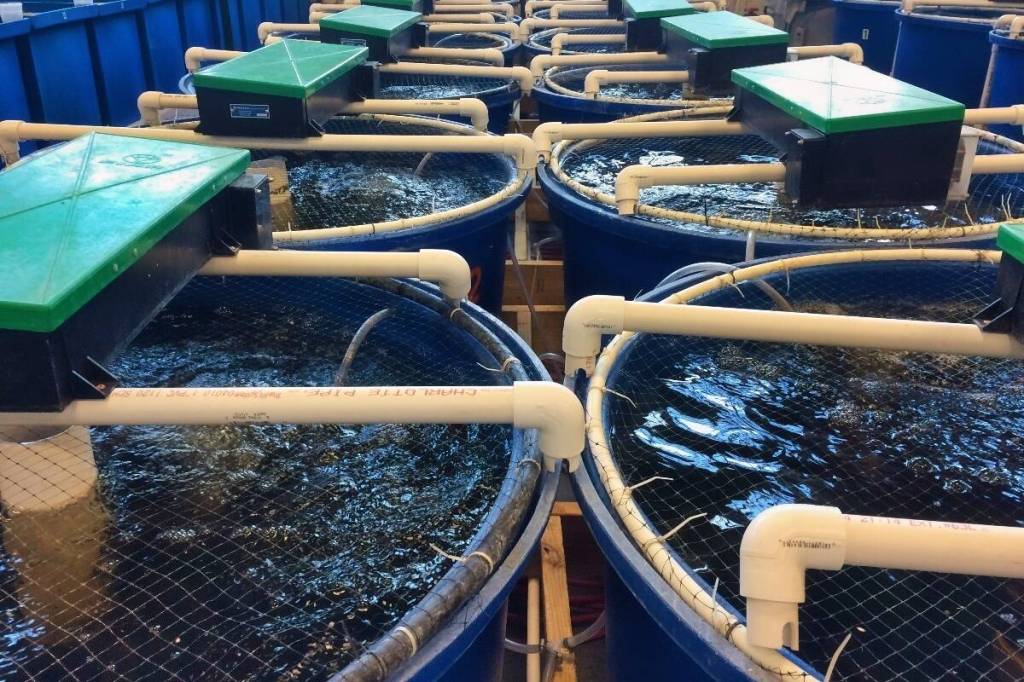
The proposed facility would use recirculating aquaculture systems (RAS) to raise Pacific salmon – Coho – in a completely controlled and contained environment, according to the Nation.
RAS is an aquaculture adaptation strategy known for being more eco-friendly, water-efficient and highly productive, as it is not associated with the harmful environmental impacts of open-net pen aquaculture. This approach mitigates concerns around water pollution, escaped fish, sea lice infestations and algae bloom issues, the Nation said.
The Homalco First Nation is not the first Indigenous community to test the land-based waters of salmon farming on Vancouver Island.
The ‘Namgis First Nation launched an operation in 2017 outside Port McNeill that raised Atlantic salmon when it first opened, aiming to prove that sustainable, land-based aquaculture was possible. However, the farm later switched to steelhead trout and has been leasing its operations to Kuterra since 2019.
In 2024, Kuterra reported harvesting four tons of steelhead a week, which was roughly 2,000 fish.
According to Andrea Frommel, assistant professor of applied biology and chair in sustainable aquaculture at UBC, land-based salmon farms can be viable systems of aquaculture. She pointed to Norway and Denmark as examples, which are both experiencing booms driven by RAS and flow-through technologies.
Frommel noted that Coho salmon, in particular, is a cold-water fish that has been successfully reared in freshwater throughout its entire life cycle.
“Land-based farming is a different beast that requires a lot of technical knowledge of fish health and the technicalities of the system,” she said. “But once you have that, it’s feasible to have your fish reared healthily.”
“The reason why open-net pen salmon farming is so economical for salmon farmers is that they’re not carrying the costs to the environment,” Frommel added. “As soon as the costs, including the costs of losing wild Pacific salmon, of eutrophying the ocean, of spewing all that waste, medications, chemicals into the environment. As soon as those costs are rolled into it, open-net farming would be prohibitively expensive.”
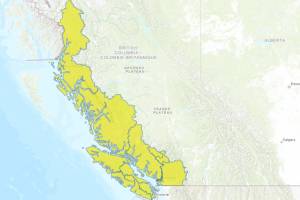
To mitigate potential impacts on wild salmon, the federal government has provided open-net salmon farms along the coast until June 2029 to transition to closed-containment systems, whether on land or in the ocean.
But critics of land-based salmon farming have cited Atlantic Sapphire, the largest global onshore aquaculture company, as evidence that land-based aquaculture is not yet economically viable.
Since its launch in 2017, Atlantic Sapphire, which has a giant facility in South Florida, has faced both technological and biological challenges. Issues such as mass fish mortalities, system malfunctions and rising operational costs have hindered production goals and undermined investor confidence.
The BC Salmon Farmers Association has contended that land-based aquaculture is currently not viable on Vancouver Island. This is primarily due to limited access to the high energy these farms would need, along with their immense freshwater needs.
However, Arman Limon, with the Homalco Nation, said those concerns are not being dismissed and are central to the feasibility work now underway.
“Water is filtered, treated and reused through recirculating aquaculture system technology, with losses primarily limited to evaporation and routine operations,” he said. “This significantly reduces ongoing freshwater demand compared to conventional aquaculture models.”
“The Nation has a long history of opposing ocean-based fish farms in its territory, and this feasibility study is about determining whether a land-based approach can meet environmental, technical and community standards,” he wrote. “If it cannot, the project will not proceed.”
The Nation also proposes to incorporate optimized feeding and growth monitoring systems, use no antibiotics or other harmful chemicals, and include micro-algae and tilapia fish production components.